Approvals
Sign-off that stands up to an audit.
Approval chains define exactly who must sign and in what order. Each gate is enforced with 21 CFR Part 11 electronic signatures and a complete, tamper-evident signature history — so a record only advances once the people accountable have signed.
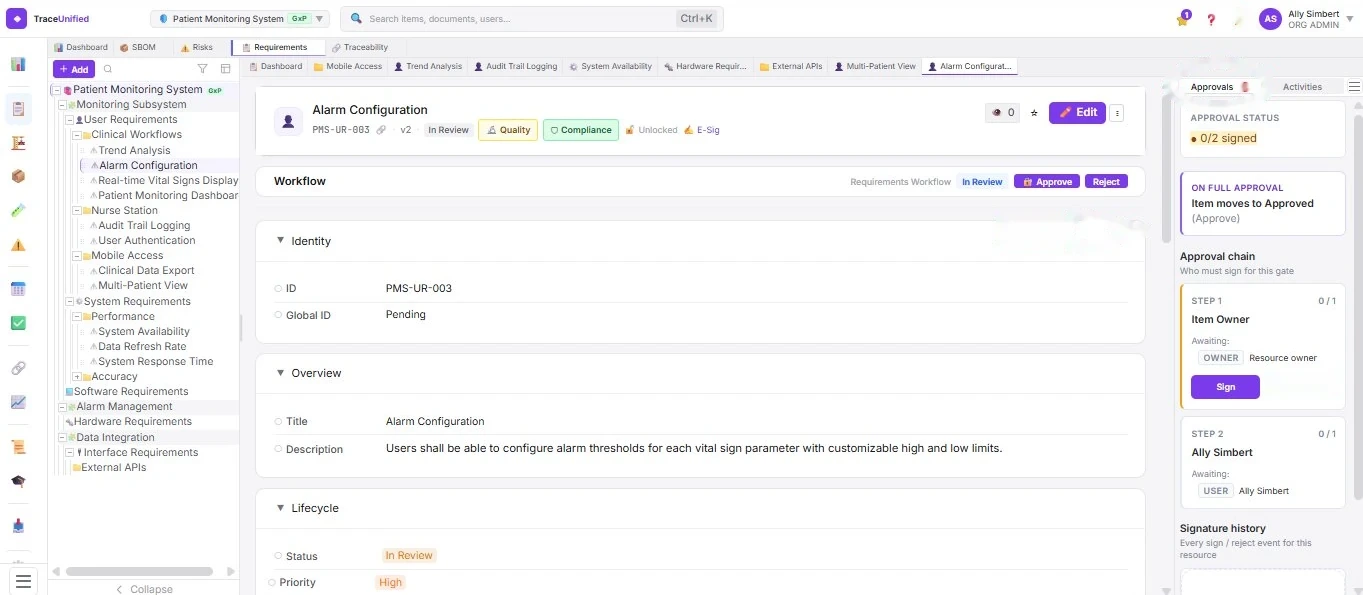
An approval chain enforced with Part 11 electronic signatures — the signer re-authenticates, and every signature is bound to the exact version.
What it does
A signature that means something.
A checkbox anyone can tick proves nothing. A Part 11 signature — re-authenticated, bound to the version and the reason, written to a tamper-evident history — is evidence a regulator will accept.
Approval chains
Define the full signing path — author, quality, regulatory — and the order it must follow. A record cannot jump a gate or advance on a partial set of signatures.
Part 11 signatures
The signer re-authenticates at the moment of signing, and the signature is bound to the exact version of the record and the reason for signing.
Signature history
Every signature, rejection, and re-submission accumulates into a complete, tamper-evident history attached to the record.
Rules per record type
Match the signing path to the kind of record and the stakes, so a minor change and a design freeze follow appropriately different paths.
On the thread
The gate the whole thread waits on.
When an inspector asks who approved a document, on what version, and when, the answer is already assembled — and because it is tamper-evident, it stands as evidence rather than a claim.
Approve with evidence that holds.
Enforce who signs and in what order, with Part 11 signatures and a tamper-evident history — so every approval is defensible.